


High predication accuracy
A good quality Cloudera practice test will have an evident and correct direction about the exam. That is what candidates need most. As far as our company concerned, our Cloudera Certified Developer for Apache Hadoop free questions can predict some real exam questions correctly. At the same time, some of our questions are quite similar to the real questions of the CCDH valid questions. As you can see, only you are ready to spend time on memorizing the correct questions and answers of the CCD-333 study guide can you pass the Cloudera Certified Developer for Apache Hadoop exam easily. At least, there will be some difficult parts for you to understand and review. You must pay special attention to them. Up to now, our predication of the exam has been very successful. At the same time, we have aided many candidates to pass the Cloudera Certified Developer for Apache Hadoop exam for the first time. It can be called a magic and powerful study guide.
As old saying goes, laziness in youth spells regret in old age. We should cherish the years of youth. Try hard to step forward. Our Cloudera Certified Developer for Apache Hadoop practice material can be your new challenges. You will have a clear understanding of the internet technology on our Cloudera Certified Developer for Apache Hadoop study guide. Perhaps your interests will be greatly inspired. After you have completed the whole learning task about our CCDH training material, you can develop and write your own programs. That is possible. You just need to click to purchase our Cloudera Certified Developer for Apache Hadoop test engine on our websites.

Pleasant purchasing experience
Once you enter our official websites, we have prepared well to sell the best Cloudera Certified Developer for Apache Hadoop reliable training to you. Every page is clear and has no problems. The relevant products are neatly arranged and have through explanations. You can add the CCD-333 practice test you need into your shopping cart. In addition, your money security and personal information safety are completely kept secret. Payment is quick and easy. We also offer various payment ways of our Cloudera Certified Developer for Apache Hadoop training material to facilitate the consumer. Special staff will maintain the website regularly to ensure the normal operation. We are responsible and reliable. Our goal is to generate the best purchasing experience for every customer.
After purchase, Instant Download: Upon successful payment, Our systems will automatically send the product you have purchased to your mailbox by email. (If not received within 12 hours, please contact us. Note: don't forget to check your spam.)
Various learning experience
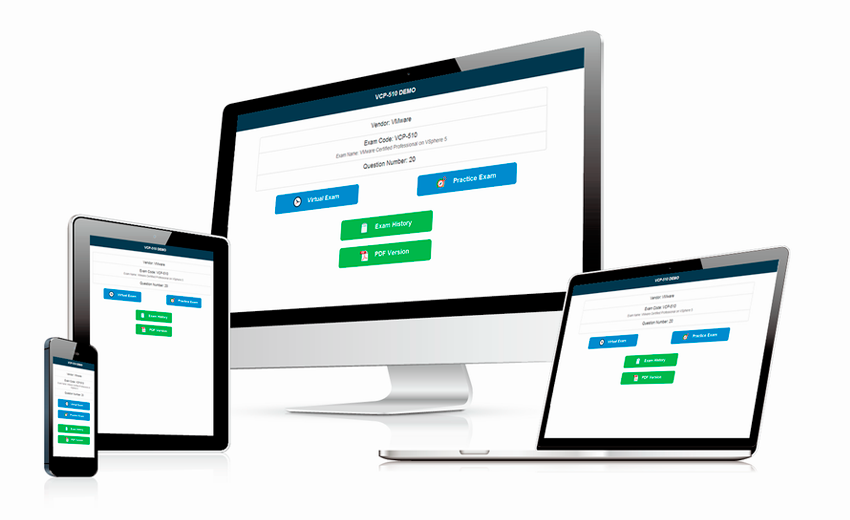
Nowadays, many products have changed a lot in order to attract more customers. Of course, the education industry also takes place great changes. New learning methods are very popular in the market. Our Cloudera Certified Developer for Apache Hadoop practice material has also keeps pace with the development. Thanks to modern internet technology, our company has launched the three versions of the CCDH study guide. They are windows software, mobile applications and pdf version. The core competence of our Cloudera Certified Developer for Apache Hadoop practice test is variety. In order to service different groups of people, these three versions of the CCD-333 reliable training truly offer you various learning experience. We have invested enormous efforts from design to contents of the three version of the Cloudera Certified Developer for Apache Hadoop training material. You will enjoy the learning atmosphere of our test engine.
Cloudera Certified Developer for Apache Hadoop Sample Questions:
1. For each input key-value pair, mappers can emit:
A) As many intermediate key-value pairs as desired. There are no restrictions on the types of those key-value pairs (i.e., they can be heterogeneous).
B) As many intermediate key-value pairs as desired, but they cannot be of the same type as the input key-value pair.
C) One intermediate key value pair, but of the same type.
D) As many intermediate key value pairs as desired, as long as all the keys have the same type and all the values have the same type.
E) One intermediate key value pair, of a different type.
2. What is the behavior of the default partitioner?
A) The default partitioner computes the hash of the value and takes the mod of that value with the number of reducers. The result determines the reducer assigned to process the key value pair.
B) The default partitioner assigns key value pairs to reducers based on an internal random number generator.
C) The default partitioner implements a round robin strategy, shuffling the key value pairs to each reducer in turn. This ensures an even partition of the key space.
D) The default partitioner computes the hash of the key. Hash values between specific ranges are associated with different buckets, and each bucket is assigned to a specific reducer.
E) The default partitioner computes the hash of the key and divides that value modulo the number of reducers. The result determines the reducer assigned to process the key-value pair.
3. You need to create a GUI application to help your company's sales people add and edit customer information. Would HDFS be appropriate for this customer information file?
A) Yes, because HDFS is optimized for fast retrieval of relatively small amounts of data.
B) No, because HDFS can only be accessed by MapReduce applications.
C) No, because HDFS is optimized for write-once, streaming access for relatively large files.
D) Yes, because HDFS is optimized for random access writes.
4. Which of the following describes how a client reads a file from HDFS?
A) The client queries the NameNode for the block location(s). The NameNode returns the block location(s) to the client. The client reads the data directly off the DataNode(s).
B) The client contacts the NameNode for the block location(s). The NameNode then queries the DataNodes for block locations. The DataNodes respond to the NameNode, and the NameNode redirects the client to the DataNode that holds the requested data block(s). The client then reads the data directly off the DataNode.
C) The client contacts the NameNode for the block location(s). The NameNode contacts theDataNode that holds the requested data block. Data is transferred from the DataNode to the NameNode, and then from the NameNode to the client.
D) The client queries all DataNodes in parallel. The DataNode that contains the requested data responds directly to the client. The client reads the data directly off the DataNode.
5. Your client application submits a MapReduce job to your Hadoop cluster. The Hadoop framework looks for an available slot to schedule the MapReduce operations on which of the following Hadoop computing daemons?
A) Secondary NameNode
B) NameNode
C) TaskTracker
D) DataNode
E) JobTracker
Solutions:
| Question # 1 Answer: A | Question # 2 Answer: E | Question # 3 Answer: C | Question # 4 Answer: B | Question # 5 Answer: E |


 Edward
 Magee
Magee 
 Ward
Ward 
 Gabriel
  Isabel
  Page
Page  Cornelia
  Dana
Dana  Bertram
  Adonis
  Jay
Jay  Jenny
Jenny  Oswald
  Maximilian
  Dora
Dora  Dennis
  Isidore
  Sabina
  Allen
Allen 


