


When update speed matters, email delivery matters too. Whenever the 500-240 exam question bank is revised, TestsDumps sends the latest version to your mailbox automatically — one less thing to track while you focus on the Cisco Mobile Backhaul for Field Engineers objectives in 2026.
Cisco 500-240 Exam Syllabus Topics:
| Section | Objectives |
|---|---|
| Quality of Service (QoS) | - Latency, jitter, and packet loss requirements - Traffic classification and prioritization |
| Transport Technologies | - MPLS and IP/MPLS in backhaul networks - Microwave and fiber transport systems - TDM to packet migration concepts |
| Design and Troubleshooting | - End-to-end service validation - Mobile backhaul network design principles - Fault isolation and performance troubleshooting |
| Synchronization and Timing | - Clock distribution in mobile networks - IEEE 1588v2 Precision Time Protocol (PTP) - SyncE (Synchronous Ethernet) |
| Mobile Backhaul Fundamentals | - Mobile network architecture (2G/3G/LTE evolution) - Ethernet transport fundamentals in mobile backhaul - Backhaul requirements for mobile networks |
500-240 Exam FAQ: From Overview to Registration
Check three things. First, authorship: the Cisco Mobile Backhaul for Field Engineers questions at TestsDumps are developed by experts with long experience in this field, and every answer is verified before publication. Second, update discipline: the bank is revised at high frequency, because exam content never stands still. Third, transparency: a free demo lets you inspect real sample questions and the practice interface before paying. Materials that cannot survive those three checks are not worth your money — ours are built to pass them.
The 500-240 exam is the official examination for the Cisco Mobile Backhaul for Field Engineers certification from Cisco. It measures whether you can apply the published exam objectives to realistic working scenarios, and in a job market where enterprises keep raising requirements, the resulting credential is a clear, verifiable advantage — for job seekers and for employees aiming at the next step alike.
According to the official outline, the 500-240 exam is structured around weighted domains such as:
- Design and Troubleshooting ()
- Quality of Service (QoS) ()
- Synchronization and Timing ()
Because the exam evolves, the Cisco Mobile Backhaul for Field Engineers practice materials at TestsDumps are updated frequently — and the latest version is emailed to you automatically whenever a revision is released during your update period.
Official registration for the 500-240 exam is available through:
Choose a date that leaves room for a full round of timed practice beforehand — the deadline itself is a powerful study tool.
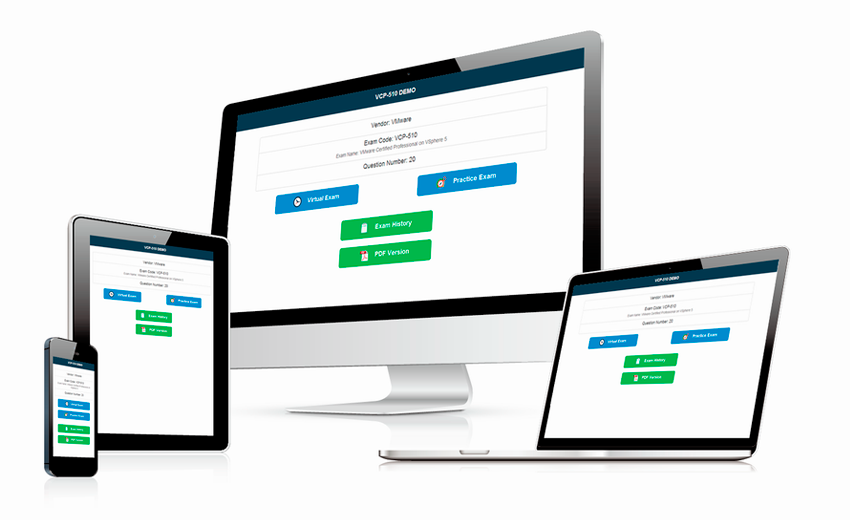
Yes — user experience begins before checkout here. Download the free demo of the 500-240 exam product to browse real sample content, see how the expert-verified answers are presented, and get a feel for the practice interface. After that preview, the decision is fully yours: if the materials fit, the full package is a one-minute checkout away; if not, the demo cost you nothing. Every demo at TestsDumps is free of charge.
Cisco lists these training resources for candidates:
Official training builds the knowledge; frequent practice with an up-to-date question bank builds the exam-day readiness. The two reinforce each other well.
Recommended experience with IP networking, Ethernet, and mobile network fundamentals.
Cisco Mobile Backhaul for Field Engineers Sample Questions:
What type of PW is the CESoPSN?
- A. Unstructured
- B. Unframed
- C. Structured
- D. Structured and unstructured
Correct Answer: C 🗳️
How does traditional mobile networks scale?
- A. nonlinearly
- B. non-exponentially
- C. exponentially
- D. linearly
Correct Answer: D 🗳️
What is the preferred method for frequency synchronization in a Unified MPLS for IP MBH Communication?
- A. Local devices Clocking Sync
- B. SyncE/IEEE 1588
- C. NTP
- D. IP MBH Communication doesn't require Synchronization
Correct Answer: B 🗳️
Viewing page 1 out of 10 pages.
Viewing questions 1-3 out of 30 questions.


 Emily

 Spring

 Maria

 James
 Elaine
 Melissa
 Rory
 Cheryl
 Dana
 Chloe
 Abigail
 Benson
 Nicholas
 Zara


