


Reasonable sale policy and warm customer service are not extras at TestsDumps — they are the product's second half. Buy the NCP-ADS package and 365 days of updates, a written refund policy, and 24/7 support come with it.
NVIDIA NCP-ADS Exam Syllabus Topics:
| Section | Weight | Objectives |
|---|---|---|
| Topic 1: Data Manipulation and Software Literacy | 19% | - Distributed computing with Dask
|
| Topic 2: Machine Learning | 15% | - Model training with GPU acceleration
|
| Topic 3: GPU and Cloud Computing | 16% | - Performance optimization
|
| Topic 4: MLOps | 19% | - Experiment tracking
|
| Topic 5: Data Preparation | 17% | - Data loading and preprocessing
|
| Topic 6: Data Analysis | 14% | - Exploratory data analysis
|
NCP-ADS Exam FAQ: Honest Answers Only
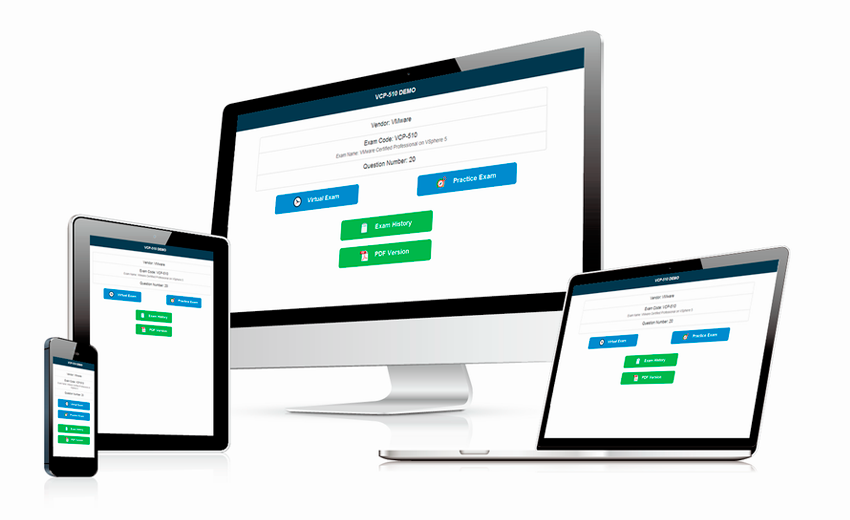
Three versions of the same study materials, each with its own character: a printable, expert-prepared PDF with free demo download and instant access; a Desktop Test Engine for Windows with customizable simulation and timed modes that works offline; and an Online Test Engine for any browser on Windows, Mac, Android, and iOS with test history and performance review. All 303 practice questions are identical across versions. Every purchase includes 365 days of free updates, a 50% renewal discount afterward, and unlimited computer installations.
Two to three years of hands-on experience in accelerated data science. Strong foundation in machine learning and GPU-accelerated computing. Experience in GPU-based optimization strategies and accelerated data manipulation techniques. Deep understanding of end-to-end data science workflows, from data preparation and cleansing to model development and deployment. Since requirements change over time, confirm the latest on the official NVIDIA exam page before scheduling.
The official NVIDIA-Certified-Professional Accelerated Data Science outline defines 6 domains. The leading three are MLOps (19%), Data Manipulation and Software Literacy (19%), and Data Analysis (14%). The full list is in the topics section above, and TestsDumps's 303 practice questions cover each one.
NVIDIA recommends these training resources for the NVIDIA-Certified-Professional Accelerated Data Science exam:
Follow the training with steady self-testing — the 303 practice questions from TestsDumps help you apply theory and fill any gaps the training leaves.
The NCP-ADS exam is a NVIDIA certification exam validating the NVIDIA-Certified-Professional Accelerated Data Science syllabus shown above. It belongs to these credential paths: NVIDIA-Certified Professional: Accelerated Data Science. Candidates in 2026 prepare for it with TestsDumps's 303 practice questions, available as a printable PDF, a Windows Desktop Test Engine, and an Online Test Engine — three versions of the same materials.
The NVIDIA-Certified-Professional Accelerated Data Science exam requires ~70% to pass, and registration costs $200 USD. A failed attempt means paying the same fee again — a readiness check with the TestsDumps engines before booking is the cheaper option.
TestsDumps issues a full refund if you take the NVIDIA-Certified-Professional Accelerated Data Science exam within 60 days of purchase and do not pass. The policy does not apply if the exam is taken within 3 days of purchase, if the exam was never actually taken, or to free materials or expired orders, and the candidate name must match the payer name. Submit a scan of your enrollment slip and the official Score Report PDF within 2 days of the exam; claims are processed within 7 days. Alternatively, exchange for two free exam products of equal value and keep your original update service. Orders arrive by email within 1 minute — contact support if nothing arrives within 2 hours.
Online, remotely proctored Register for the NVIDIA-Certified-Professional Accelerated Data Science exam through these official channels:
After booking, TestsDumps delivers your practice questions within 1 minute — preparation starts the same day.
The NVIDIA-Certified-Professional Accelerated Data Science exam contains 60-70 to complete within 120 minutes. Timed simulation in the TestsDumps Desktop Test Engine teaches that rhythm before exam day does.
NVIDIA-Certified-Professional Accelerated Data Science Sample Questions:
You need to process a dataset containing 10 billion rows, applying complex transformations and aggregations. The dataset does not fit into RAM, and you need an efficient, scalable solution for parallel processing.
Which of the following is the best choice?
- A. PySpark
- B. Pandas
- C. Dask
- D. Vaex
Correct Answer: A 🗳️
You are preprocessing a dataset using NVIDIA RAPIDS cuDF and need to handle missing values in the column temperature by replacing them with the column's median value.
Which of the following approaches correctly achieves this in an optimized manner?
- A. 1. df['temperature'] = df['temperature'].map(2. lambda x: df['temperature'].median() if x is None else x
3.) - B. df['temperature'].fillna(df['temperature'].mean(), inplace=True)
- C. df['temperature'].dropna(inplace=True)
- D. df['temperature'].fillna(df['temperature'].median(), inplace=True)
Correct Answer: D 🗳️
You are working on a large dataset (several terabytes in size) and need to perform data preprocessing, filtering, and transformations before training a machine learning model.
Given the dataset size and the requirement to optimize for GPU acceleration using NVIDIA technologies, which of the following is the most appropriate data processing library to use?
- A. pandas
- B. Dask DataFrame with Dask-CUDA
- C. Modin with Ray backend
- D. NumPy with CuPy acceleration
Correct Answer: B 🗳️
A data scientist wants to compare the performance of two different GPU-accelerated data science frameworks, NVIDIA RAPIDS (cuDF, cuML) and TensorFlow, for a tabular data classification task.
Which of the following approaches would be the best practice for designing an unbiased and effective benchmark?
- A. Use TensorFlow's built-in training time metrics without comparing equivalent RAPIDS-based operations.
- B. Run all benchmarks on a CPU to ensure fairness across frameworks.
- C. Measure execution time and memory usage for each framework using NVIDIA Nsight Systems (nsys).
- D. Ignore preprocessing and focus only on model training speed when comparing performance.
Correct Answer: C 🗳️
You need to generate synthetic data to augment an imbalanced dataset using RAPIDS™ and cuDF.
Which of the following strategies would be most effective in producing high-quality synthetic data for the minority class?
- A. Use only the majority class data to train a model and generate synthetic data using a GAN (Generative Adversarial Network) in the RAPIDS ecosystem.
- B. Create synthetic data by applying random transformations to the minority class, such as scaling, rotation, or flipping, using cuDF.
- C. Use synthetic data generation libraries like SDV (Synthetic Data Vault) in conjunction with cuDF to create synthetic data that mimics the distribution of the minority class.
- D. Generate synthetic data by duplicating entries from the minority class using cudf.DataFrame.sample().
Correct Answer: C 🗳️
Viewing page 1 out of 61 pages.
Viewing questions 1-5 out of 303 questions.


 Emily
Emily 
 Colbert
 Harvey
  Alva
Alva  Morton
  Sampson
  Cara
Cara  Quintion
  Stephanie
 Kenneth
  Roderick
  Hilary
  Cornelius
  Steven
  Gustave
  Hobart
  Xaviera


